


Summary
The article highlights “radical” Islamic values emphasized in Ramadan, including self-restraint, generosity, reflection, and truthfulness, showing how these practices challenge materialism and transform individuals toward spiritual awareness and consistent righteous living.
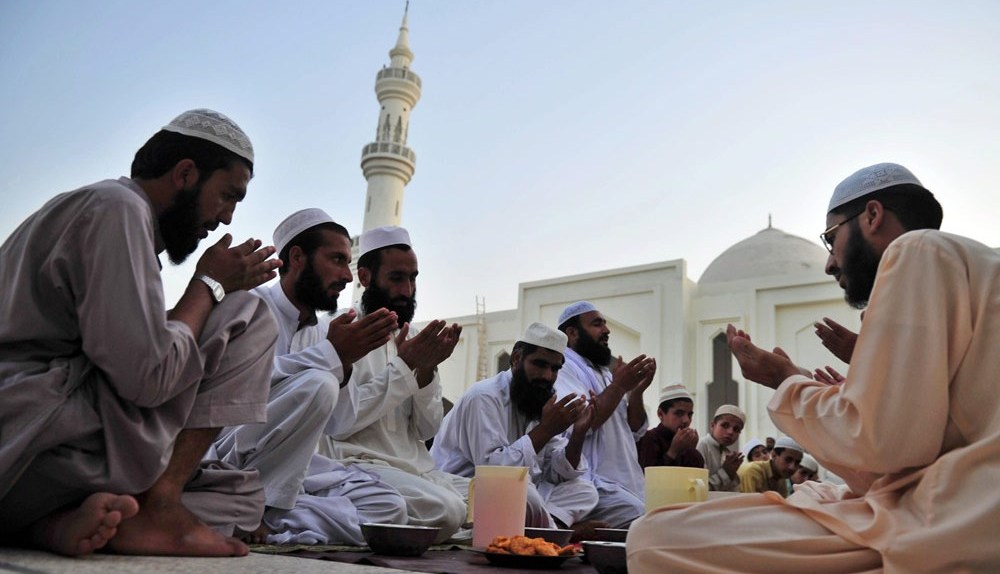
RAMADAN IS A time of selfless devotion and a month of above-ordinary worship. It is time of taking a spiritual inventory and reflecting deeply on all matters of moral significance- what it means to be a Muslim, and where does one fit in this vast panoramic community that we know as ‘humanity’.
It is a month long spiritual marathon and a time to cleanse the heart and the mind from a yearlong consumption of spiritual pollution or toxins. More importantly, it is a time for practicing Muslims to celebrate the most radical ideas that Prophet Muhammad introduced to an anarchical, Godless society who practiced, among other atrocities, female infanticide.
Number thirty, killing a person unjustly is equivalent to killing all mankind. Life is a sacred blessing granted by the Creator, as such, no human-being is at liberty to unlawfully destroy it. Therefore those parents who ruthlessly buried their infant daughters out of shame are bound to face God’s judgement.
Twenty nine, with forbearance and patience all wounded hearts are mended, and all relationships are strengthened. Vengeance only perpetuates hate and bloodshed. So, forgive the one who transgresses against you; reach-out to the one who cuts you off; give to the one who deprives you or denies you your rights, and, difficult as it may be, forgive those who may have oppressed you.
Twenty eight, speak good or maintain silence. The tongue is the primary vehicle through which ideas, affirmations, and objections of life are conveyed. No other organ in the human body is capable of building more relationships or destroying them more than the human tongue.
Twenty seven, as in justice, kindness and compassion cannot be selective. Be kind, compassionate and fair, even to those who may seem ‘unworthy’.
Twenty six, side with justice even against your loved-ones or against your own self. One should not be blinded by any personal, tribal, or systemic biases set against the marginalized and the disenfranchised.
Twenty five, deal with others in the best manners and employ your best language. Nothing demonstrates your faith more than your character, nothing demonstrates your character more than your manners, and nothing confirms your good manners more than the sensitivity of your language.
Twenty four, one’s gratitude towards God is gauged by one’s gratitude towards other human-beings. From birth onward, each one of us has depended on the compassion and love of other human beings. The same while his or her is on their deathbeds. One’s gratitude is enhanced when one evaluates his or her blessings by looking at those who are less fortunate than them.
Twenty three, give utmost care to all that is entrusted to you. Be trustworthy to all people, including those of other faiths or no faith at all.
Twenty two, seek beneficial knowledge until you find yourself in the grave. Not all knowledge is beneficial and not all beneficial knowledge is spiritual.
Twenty one, control your emotions to avoid volcanoes of anger and tsunamis of wrath. The capacity to overcome anger is the most underestimated power that anyone could possess. He who can control such emotional storms is stronger than the rest.
Twenty, Divine blessings are rotational or function like a pendulum. What you possess today in terms of authority or fortune belongs to others tomorrow. No one, no nation, no race and no faith has exclusive right or claim to it.
Nineteen, whosoever is devoid of gentleness is devoid of all goodness. God grants with the gentle attitude what He would never grant with the harsh one. Even when it does not come naturally, one must take a gentle approach to all matters.
Eighteen, don’t cheat anyone because he or she has cheated you. There are certain wrongs that you do not have the right to get even by doing the same onto the offender. Doing so will put one on a dangerous moral slippery slope.
Seventeen, dignity is found in humility. Above any person of knowledge there is another who is more knowledgeable. Likewise, above all rich person there is another, and above all those with authority, there is another who is more powerful. The best form of humility is the one intentioned to please God.
Sixteen, the legitimate leader of the people is the one who is their tireless servant. Leadership is not designating exclusive privileges and rights to the one whom authority is vested on.
Fifteen, without the right balance, nothing is sustainable. Life is a balancing act. Balance is essential to the spiritual and material well-being as well as all other things in life.
Fourteen, love for your brother that which you love for yourself. One must also hate for one’s brother that which one hates for oneself. Brotherhood is a multilayered concept that includes brotherhood in humanity.
Thirteen, the wealthiest among you is the one who is given contentment of the heart. True wealth is a spiritual state of mind. It is taming one’s greed and appreciating what God portioned for the individual.
Twelve, Islam can neither be coercive nor compulsive because. Faith resides in the heart and the heart never embraces what is forcefully imprinted on it by way of coercion or compulsion.
Eleven, no one is racially superior to another so long as their essence is the same. All human-beings are children of Adam and Adam is made of dust.
Ten, no jihad is greater than one’s own struggle to overcome one’s evil tendencies. That process of self-purification to tame the elusive impulses of lust, envy, rage and such is the most difficult task to undertake.
Nine, tame your ego with deliberate deprivation. No selfish behavior should be promoted, especially when seeking access to power.
Eight, with right intentions all things fall in their right places. While worldly matters may be judged based on their results, in the spiritual realm all matters are judged based on their intentions.
Seven, faith is a lifeline that each one needs. It is the mechanism through which one navigates his or her way out of the darkness of spiritual ignorance. The highest level of faith is state of relentless God-consciousness and self-policing as each will be summoned before The Judge of all judges.
Six, stand with and empower the poor, the needy, and the oppressed. If one, due to circumstances, found oneself incapable, the least one could do is to provide moral support, or at least hate it in one’s heart.
Five, inquiry is the most effective cure for ignorance. When one does not have all the facts or is not sure, one should ask those who do know, regardless of their faith.
Four, in one capacity or another, each one of you is a leader. Each is a shepherd in a particular setting of life or another- family, community, work, etc. Each shall be judged based on how each discharge his or her responsibility.
Three, the best form of jihad is speaking truth to power. Never assist a tyrant, never capitulate to his oppression, and never trade bloody anarchy for repression.
Two, your neighbors have special rights upon you. Not only should they never be the target of your vices and evils, you should never go to bed bellyful while your neighbor is hungry. Your neighbors are those who live in forty houses in every direction.
One, there is only One Absolute Truth. It is The Truth that transcends all other truths. It is what all other truths stem out of or mimic. It is the Divine Litmus Test through which all proclaimed truths are authenticated. And that never-changing Truth is God. He created all things and set time in motion.
Though nowadays the ritualistic aspect of the month veils its more profound meaning, it is never too late to embrace Ramadan’s radically transformative power.
———————–
Abukar Arman is a former diplomat who writes about the two issues pushing the world to the edge- foreign policy & religion. Follow on Twitter: @Abukar_Arman
Frequently Asked Question
Answering the most relevant questions to help you better understand the article.
Ramadan is described as a spiritual marathon because it offers a sustained period to cleanse the heart and mind from accumulated spiritual impurities through fasting, reflection, and increased devotion to Allah.
Ramadan helps cleanse believers from spiritual pollution and toxins accumulated throughout the year, allowing them to purify their hearts, minds, and actions through fasting, worship, and conscious self-discipline.
Fasting restrains natural desires and encourages discipline, helping believers improve spiritually by focusing on worship, controlling impulses, and redirecting attention toward pleasing Allah rather than satisfying worldly needs.
Reflection during Ramadan involves pondering Qur’anic verses, creation, and one’s purpose, helping believers develop deeper understanding, transform behavior, and revive their natural inclination toward sincere worship and obedience to Allah.
Truthfulness is emphasized to encourage honesty with oneself and others, eliminating false speech and insincerity, and fostering personal accountability that leads to spiritual growth and stronger adherence to Islamic values.
Ramadan challenges habitual distractions and routines by requiring restraint from food, desires, and negative behaviors, encouraging believers to reassess priorities and shift focus from worldly indulgence to spiritual improvement.
Believers are expected to maintain spiritual growth beyond Ramadan by continuing reflection, truthfulness, and discipline, avoiding a return to previous habits and ensuring lasting change in their relationship with Allah.
Ramadan encourages self-awareness by prompting individuals to honestly evaluate their behavior, relationships, and intentions, helping them identify weaknesses and strive for personal and spiritual improvement through conscious effort.
Controlling speech, including avoiding lies and unnecessary words, is significant as it reflects inner discipline, protects spiritual integrity, and aligns actions with the ethical and moral objectives of fasting.
Ramadan promotes consistency by establishing habits like reflection and truthfulness, encouraging believers to continue these practices throughout the year, ensuring that spiritual benefits extend beyond the month itself.


1 Comment
Hmmm