Close Menu
    Support Us
    Facebook X (Twitter) Instagram
    • About
    • Authors
    • Store
    • Spanish
    • Contact
    Al Jumuah MagazineAl Jumuah Magazine
    • Home
    • Quran
      • Commentary
      • Sciences
    • Sunnah
      • commentary
      • Sciences
    • Character
    • Advice
      • Family
      • Society
    • Thoughts
    • Discover islam
    • Hajj FAQs
    HAJJ
    Support Us
    Al Jumuah MagazineAl Jumuah Magazine
    Home»Thoughts»The Rights of The Prophet (ﷺ) Upon The Ummah
    Thoughts

    The Rights of The Prophet (ﷺ) Upon The Ummah

    Nisaar NadiadwalaBy Nisaar Nadiadwala13 Mins Read
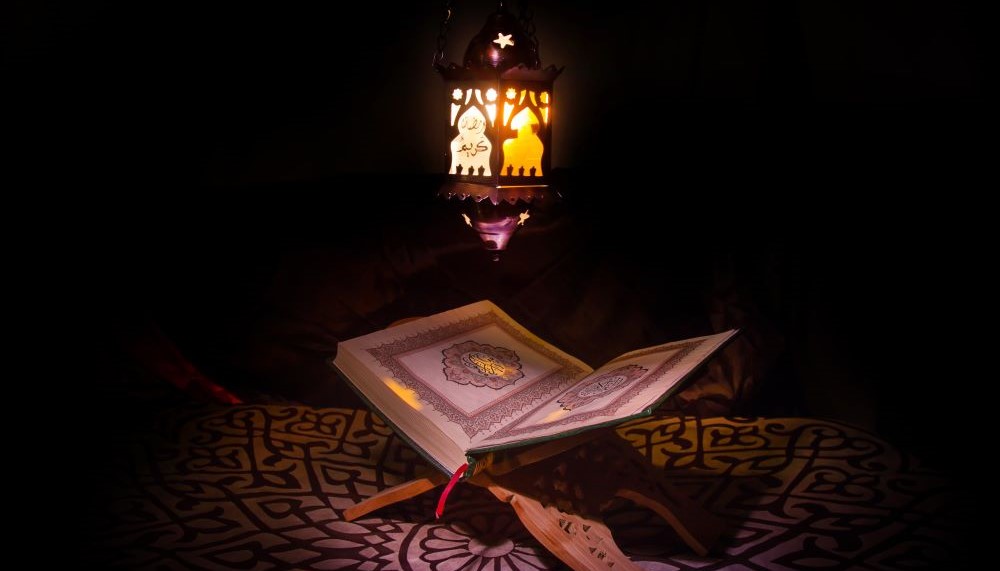
    read quran
    Share
    Facebook Twitter WhatsApp Pinterest LinkedIn Email

    Summary

    The article explains the Prophet’s rights upon the Ummah: belief, honor, support, and obedience, emphasizing Tawhid, adherence to Sunnah, and following divine guidance as the path to success in this world.

    (This article begins with the verse from a Makki Surah, revealed in context to the People of the Book during the initial years of Dawah. For the Makkan pagans, it was something new that a person declaring himself to be a Messenger of Allah and rejecting all their idols which they had been worshipping for centuries. So they would discuss this matter with the People of the Book who were waiting for a prophet to come as per their scriptures. They had a mentioning of many signs in their books and used to ask the pagans to inquire from him to verify if he was that Prophet. When they verified those signs to be true, only a few of them accepted Islam, Allah revealed the above verse in Makkah itself which also has a general rule of sincerity towards His appointed Messenger which they called ‘The Rights of the Messenger upon his people’. This article declares the rules for successful believers regarding the last Messenger.)

    “Those who follow the Messenger, the unlettered Prophet, whom they find written in what they have of the Torah and the Gospel, who enjoins upon them what is right and forbids them what is wrong and makes lawful for them the good things and prohibits for them the evil and relieves them of their burden and the shackles which were upon them. So they who have believed in him honored him, supported him, and followed the light which was sent down with him – it is those who will be successful.” [Surah Al Araf: 157]

    The above verse has two parts: Frist, the duties of the Messenger of Allah (ﷺ) towards mankind, and second, and the duties of his followers towards him. First Allah mentions the duties of the Messenger, and if we were to study them, we will find them to be huge blessings for the entire mankind.
    1. He commands that which is good and forbids that which is evil.
    2. He declares halal (permissible) all that is good and haram (impermissible) all that is bad.
    3. He relieves them of their burdens and frees them from the shackles which were upon them.
    He Commands Good And Forbids Evil The biggest decisive statement about commanding good is Tawhid (monotheism). The first announcement the Prophet of Allah made was, “O Mankind your lord is one Lord and I am His Messenger so follow me.” Tawhid is the fountain of every good. Every good deed is connected to Tawhid. The Prophet said,

    “Faith has seventy branches, the highest is to believe in Allah, and modesty is also a branch, as well as removing a harmful object is also a branch.” (Bukhari: 5578, Muslim:100)

    That is why every good deed is promised to be rewarded multiple times. Similarly, shirk (polytheism) is the biggest evil declared by Allah and His Messenger and the entire prophetic period was a struggle against shirk.

    “Indeed shirk is the biggest wrongdoing.” [Surah Luqman: 13]

    He got every idol and false deity demolished in Arabia during his lifetime and that was his mission. All Good is Halal and All Bad is Haram This general statement makes it easy for even an illiterate to identify haram or halal by its virtue, and it would covere all forms of alcohol, gambling, smoking, and immodesty easily. One example should suffice that the followers of Prophet Muhammed present the biggest society of teetotalers, people who do not imbibe alcohol at all. Relief From Burdens and Freedom From Shackles Islam banned the killing of daughters, interest-based transactions, extravagance in spending, and it instead encouraged easy marriages, charity, and other good in order to relieve the society of social and financial burdens to which they were chained for centuries. The Duty of the Followers Towards the Messenger
    1. They should believe in him
    2. They should honor him
    3. They should help him
    4. They should follow the light that has been revealed upon him
    Belief in the Messengership Every Muslim sect claims to believe in the Messenger of Allah, but not all qualify the benchmark of belief. The Qur’an and Hadith have straightly put up the conditions for belief to be accepted. Allah says,

    “So if they believe in the same as you believe in, then they have been [rightly] guided; but if they turn away, they are only in dissension, and Allah will be sufficient for you against them. And He is the Hearing, the Knowing.” [Surah Al Baqarah: 137]

    Right from understanding the concept of Tawhid, to the act of prayer, every act is connected to belief. Every Muslim is supposed to keep his faith uncorrupted and upright. Do Not Elevate His Status Higher Than What Allah Has Stated Belief in the Messenger includes not elevating his status higher than what Allah has placed him in. The Messenger declared,

    “Beware of those who preceded you and used to take the graves of their Prophets and righteous men as places of worship, but you must not take graves as mosques; I forbid you to do that.” (Sahih Muslim: 532)

    Make the Prophet a Decisive Factor in Every Dispute-

    “But no, by your Lord, they will never be believers until they accept you (Prophet) as the judge in their disputes, and find no resistance within themselves against your decision and submit wholeheartedly.” [Surah Nisa: 65]

    The above verse places two conditions of faith concerning prophethood: First, to refer all disputes to the Messenger (i.e., the Sunnah), and second, to accept the decision without hesitation. Honor The Messenger The post of Prophethood is appointed by Allah, as it is He who chooses His messenger. Therefore, one must honor him the way Allah has commanded His Messenger to be honored, and that is through obedience.

    “O you who believe, make not (a decision) in advance before Allah and His Messenger, and have taqwa of Allah. Verily, Allah is Hearing, Knowing. O you who believe! Raise not your voices above the voice of the Prophet, nor speak aloud to him in talk as you speak aloud to one another, lest your deeds should be thwarted while you perceive not. Verily, those who lower their voices in the presence of Allah’s Messenger, are the ones whose hearts Allah has tested for Taqwa. For them is forgiveness and a great reward.” [Surah Hujarat: 1-3]

    There are multiple usool (principles) of honoring the Messenger (ﷺ) in the above three verses, such as:
    1. A Muslim should not overrule the command of Allah and His Messenger (ﷺ).
    2. No Muslim is allowed to resist or oppose the command of the Messenger (ﷺ) of Allah.
    3. Allah has connected Taqwa to unconditional obedience to Him and His Messenger and has offered huge rewards for the Muslims who uphold these commands.
    4. Resisting the command of the Messenger (ﷺ) by putting up the command and understanding of someone else (including scholars) is so grievous that it can cause all the good deeds of a believer to be wiped away.
    The context of the revelation of verse is very interesting. Anas bin Malik said, “The Prophet (ﷺ) missed Thabit bin Qays and a man said, ‘O Allah’s Messenger, I will find out about him.’ That man went to Thabit and found him sitting at home with his head lowered and asked him, ‘What is the matter?’ Thabit said, ‘An evil matter!’ And he said that he used to raise his voice above the voice of the Prophet. He feared that his good deeds would be useless, and he would be among the people of the Fire. The man went back to the Prophet (ﷺ) conveyed Thabit’s statement and returned to Thabit with wonderfully good news. ‘Go back and inform him that he is a man of paradise,’’ (Tafsir Ibn Kathir, Surah Hujarat: 1-3) The companions of the Prophet were very sensitive about every command regarding the status of the Messenger and they displayed concerns even about minute things. Unfortunately, today we see very less of such regard towards the ethics of obeying the Messenger of Allah. Helping the Messenger Every Prophet of Allah required help from good people who believed in them. When Allah appointed Musa as His Messenger, he asked for a deputy and proposed his brother Harun’s name, which Allah accepted.

    “And appoint for me a helper from my family, Harun, my brother.” [Surah Taha: 29-21]

    This was a request from Musa concerning something not about himself. That was his request for the assistance of his brother. Ibn `Abbas said, “Harun was made a Prophet at the same moment that Musa was made a Prophet.” (Tafsir Ibn Kathir, Surah Taha: 30) But if the people around him are not good, then it brings about difficultly for the Prophet, such as the case of Musa when his people refused to obey him many times. He said,

    “Why do you annoy me even though you know my truth regarding the Message that I brought you.” [Surah Saff: 5]

    Even Isa ibn Maryam looked around for help from good people. Allah tells us that he said,

    “‘Who will be my helpers in Allah’s Cause?’ The Hawariun (disciples) said, ‘We are the helpers of Allah; we believe in Allah and bear witness that we are Muslims.’” [Surah Al e Imran: 52].

    Aiding the Messenger is to help, abide by, and to promote his religion. Allah has appreciated such helpers and promised them His help and consistency.

    “O believers, if you help Allah, He will help you and make your foothold firm.” [Surah Muhammed: 7]

    Helping Allah’s Messenger (ﷺ) is a command with strict mention in the Quran, and Allah declares that if none were to help His Messenger, then He alone is enough.

    “Whoever should think that Allah will not support [Prophet Muhammad] in this world and the Hereafter – let him extend a rope to the ceiling, then cut off [his breath], and let him see: will his effort remove that which enrages [him]?” [Surah Hajj: 15]

    The Companions of the Prophet went out of their way to aid him during the most severe crisis. An excellent example of aiding the Prophet was displayed during the Battle of Badr. Ibn Mas’ud said, “I was a witness to something that Al-Miqdad bin Al-Aswad did, and I would like more than almost anything else to have been the one who did it. Al-Miqdad came to the Prophet while he was invoking Allah against the idolaters and proclaimed, ‘We will not say as the people of Musa said, “So go you and your Lord and fight you two.” Rather, we will fight to your right, to your left, before you and behind you.’ I saw the Prophet’s face beaming with pleasure because of what Al-Miqdad said to him.” (Tafsir Ibn Kathir; Surah Anfal: 9) Follow the Light with Which the Messenger Has Come With The advent of every Prophet required that he be believed, obeyed, and followed. The foundation of the following is Tawhid. Every Prophet was sent to stop his respective people from shirk and instead to solely worship Allah.

    “And We certainly sent into every nation a Messenger, [saying], “Worship Allah and avoid false deities.” [Surah Nahl: 16]

    The light is the religion of Islam, and it brings one out from darkness of shirk and every evil in society.

    “A Book revealed upon you so that you may bring out mankind from the depth of darkness towards light.” [Surah Ibrahim: 2]

    It is the test of a person’s belief that he accepts or defies the guidance of Allah.

    “Do people think once they say, ‘We believe,’ that they will be left without being put to the test?” [Surah Ankabut:2]

    The last part of the verse of Surah al-Araf gives assurance and glad tidings that

    “Such are the people who will succeed.” [Surah Al Araf: 157]

    The prophet (ﷺ) accomplished his duties towards the Ummah and now the Ummah must fulfil their responsibility towards the Prophet (ﷺ). This is the route of success in this world and the hereafter.

    Frequently Asked Question

    Answering the most relevant questions to help you better understand the article.

    What are the main rights of the Prophet upon the Ummah?
    The Prophet’s rights include believing in him, honoring him, helping him, and following the light revealed with him, forming the essential duties required for true faith and ultimate success.
    What does believing in the Messenger truly require?
    Belief requires accepting his message fully, maintaining correct faith, and ensuring all acts of worship align with his teachings, without distortion, deviation, or selective acceptance of his guidance.
    Why must the Prophet not be elevated beyond his status?
    Believers must not raise the Prophet above his divinely assigned status, avoiding practices like turning graves into places of worship, ensuring pure monotheism and preventing exaggeration in reverence.
    How should disputes be resolved according to the article?
    Disputes must be referred to the Prophet’s judgment, meaning the Sunnah, and accepted wholeheartedly without resistance, as true belief requires submission to his decisions in all matters.
    What does honoring the Prophet involve?
    Honoring the Prophet includes obeying his commands, not speaking above him, avoiding opposition to his teachings, and demonstrating deep respect as commanded by Allah, which is directly linked to Taqwa.
    What are the consequences of opposing the Prophet’s commands?

    Opposing the Prophet’s commands or preferring others’ opinions over his guidance can nullify good deeds, showing the seriousness of obedience and the central role of his authority in Islam.

    What does helping the Prophet mean after his lifetime?
    Helping the Prophet means supporting, practicing, and spreading his religion, upholding his message, and striving in Allah’s cause, as demonstrated by companions who assisted him during hardships and battles.
    What role does Tawhid play in following the Prophet?
    Tawhid forms the foundation of following the Prophet, as every prophet called to worship Allah alone and reject false deities, making monotheism central to obedience and guidance.
    What responsibilities did the Prophet fulfill toward humanity?
    The Prophet commanded good, forbade evil, made lawful what is good, prohibited what is harmful, and relieved people from burdens, establishing guidance and mercy for all humanity.
    What is the outcome of fulfilling the Prophet’s rights?
    Those who believe in, honor, support, and follow the Prophet attain success, as fulfilling these duties leads to guidance, stability, and ultimate success in both worldly life and the Hereafter.
    Previous ArticleKnow Thy Children
    Next Article A Community of Worth: The Dire Need for a Social Ethic of Merit Among Us
    Nisaar Nadiadwala

    Previously a visiting university faculty member in both Malaysia and Tanzania, Nisaar Nadiadwala is presently based in the UAE as a trainer in Public Speaking and Communication Skills. As a consultant and a coach in the field of Public Speaking, panel discussions, news debates, and in anchoring Radio-TV-Podcast shows, he has helped people to build their careers through polishing their skills in making presentations. Besides being an award-winning speech maker, he has received the honorable title of Top Writer on Quora in 2018 and continues to retain that position: https://www.quora.com/search?q=Nisaar+Nadiadwala In regard to his socio-religious contributions, Nisaar focuses on family issues from an Islamic perspective, trying to cover every segment of the family. His special attention remains the tarbiyah of teenagers, for which he is invited to many Islamic Schools as a consultant and as a speaker on the teenage period of life. He relates his work to the grooming of adolescents, motivating them to adopt the Islamic way of life through his TV series, articles and workshops in community schools. His latest release is an E-book Teen's Deen - a collection of short stories for teenagers - published by www.themuslimfamily.net He has hosted his Pre-Marriage Preparatory Workshop in many cities of India and abroad. His book, I want to marry, but …, is the talk of the community in the desi crowd. Mr. Nadiadwala trains both online and in person through his course packages. He can be contacted at: Nisaar Nadiadwala [mnisaar@gmail.com].

    Related Posts

    Niyyah in Islam: How Your Intention Shapes Every Act of Worship

    By Al Jumuah Staff
    Read More

    None Too Soon

    By AlJumuah Magazine
    Read More

    Islamic Views of TAHRIF and Orthodox Judaism’s View Of ORAL LAW

    By Rabbi Allen S Maller
    Read More

    Can We Really Judge a 7th-Century Man by Today’s Standards?

    By Salma Chaudhary
    Read More

    The Umbrellas of Madinah: An Engineering Marvel that Provides Shade and Tranquility for Countless Pilgrims

    By Sajida Fakhri
    Read More

    Are You a Complete Muslim? | Part 13

    By Munira Al-Mawdi
    Read More
    Leave A Reply Cancel Reply

    This site uses Akismet to reduce spam. Learn how your comment data is processed.

    Recent Comments
    • Muzammil on Zukhraful Qawlal Ghuroor – When Sins Are Beautifully Presented, Deception is Easy: “Clear”
    • qassim ouma akoko on Monotheistic Pilgrimage: The Ka’bah and Bait Al-Muqaddas / Beit HaMiqdash: “be blessed”
    • Abubakar on Having Guests? Host from the Heart – Caring with Islamic Etiquette: “A beautiful reminder that true hospitality in Islam is not about luxury, but about kindness, generosity, and sincere care for…”
    • A Muslim man on Unveiling The Hûr Al-‘În | Part 1: “Okay, look men are creepy and most of you women don’t have to deal with men in Jannah so the…”
    • Jacqui DeLorenzo on The Spirituality of Ramadan and Fasting: “This is a deeply thoughtful and enriching exploration of the spirituality of Ramadan and fasting. I truly appreciate how the…”
    Menu
    • About
    • Contact
    • Authors
    • Spanish
    • Store
    Facebook X (Twitter) Instagram
    Copyright © 2026 Al Jumuah Magazine

    Type above and press Enter to search. Press Esc to cancel.

    ALJUMUAH MAGAZINE

    🌙

    Assalamu Alaikum!

    Stay Connected With AlJumuah

    Receive Islamic reminders, Quran and Sunnah reflections, and the latest updates from AlJumuah.

    Message us on WhatsApp to receive our official channel link.


    Say Hi on WhatsApp

    Free to connect • Opens WhatsApp