


Summary
The article explains the purpose, wisdom, and basic rulings of Zakāt al-Fiṭr, highlighting its role in purifying the fasting person and supporting the needy. It discusses who must pay it, whom it covers, and why this obligatory charity strengthens the Muslim community.
THE SCOPE OF worship in Islam is universal, in the literal sense. For the Quran tells us that each and every constituent of creation— near or far, seen or unseen, animate or inanimate—worships the true and only Allah,
Indeed, every being in the heavens and the earth comes to the All-Merciful but as a worshipper. [Surat Maryam,19:93].
It is only human beings, then, who are called upon to voluntarily join in the wonderful symphony of worshipful creation. Islam’s five pillars—belief in one Allah, salah, fasting, zakah, and Hajj—are the cornerstones upon which we build such an outstanding and worshipful life. But no such establishment of a dignified life of faith on earth, either personally or socially, can take place without one essential pillar that represents the intersection of our professed convictions and our practical lives. Zakah is that pillar, for it is the primary instrument that Allah has placed at our disposal to spiritually and socially uplift every Muslim and the entirety of our community—and thereby to assert a benevolent hand for the commonweal of humanity. Among zakah’s most blessed manifestations—and certainly its most widespread—is the obligatory annual giving of the Zakat Al-Fitr charity, before the solemnizing of Ramadan by the Eid Salah.The Wide-Ranging Meaning of Zakah
The Arabic word ‘zakah’ means ‘purity,’ ‘cleansing,’ ‘wholesomeness,’ and ‘integrity’ (in both their physical and moral senses). It means, also, ‘growth’ or ‘increase.’ Understanding these linguistic meanings helps our proper appreciation of what zakah is as a financial, or fiduciary rite mandated by Allah. For, indeed, each of these senses finds its native expression in zakah’s correct function in our lives and in our local communities and societies. It is known also by the term Ṣadaqat Al-Fiṭr (the Sincere / Righteous Charity of Fast Breaking), because it testifies to one’s sincerity to Allah and to his or her righteousness in seeking to comply with Allah’s Sharîʿah, (Sanctioned Laws). Zakah’s primary goal is not that of simple “charity.” Allah has instituted other mechanisms for this purpose. Rather, zakah is much farther seeing and reaching. Its objective is to secure the psycho-spiritual well-being of every single Muslim as an individual servant of Allah, and to safeguard the socio-moral welfare of the entire Muslim ummah. The reason that the objectives of zakah are so profound and sweeping is that its principle is universally sound and materially decisive. Zakah is the giving of wealth, in all its material manifestations, incumbent upon all those who have it (and this is its comprehensive aspect) to all those whose need gives them a right to a minimally dignifying sum from it. And this is its deeper significance. For it means that Allah has chosen to invest the wealth of some of us [the “have’s”] (as a means to lawful increase) with others among us [the “have not’s”] (in the form of a trust that must be conveyed to its rightful beneficiaries) –so as to insure that the holdings of the “have’s” are to remain pure and that our societies are to have integrity. What is, indeed, so profound about this is that it underscores to humanity that all of its wealth, in fact, is disbursed to it on loan from Allah, who, as the Creator, is the sole Owner of life and of all that the living hold in possession. Allah has revealed this pillar of faith to every believing community in history. But He has expanded it into an inclusive, highly systematized institution, enjoined upon all who would follow Islam.The Sum of Zakat Al-Fitr
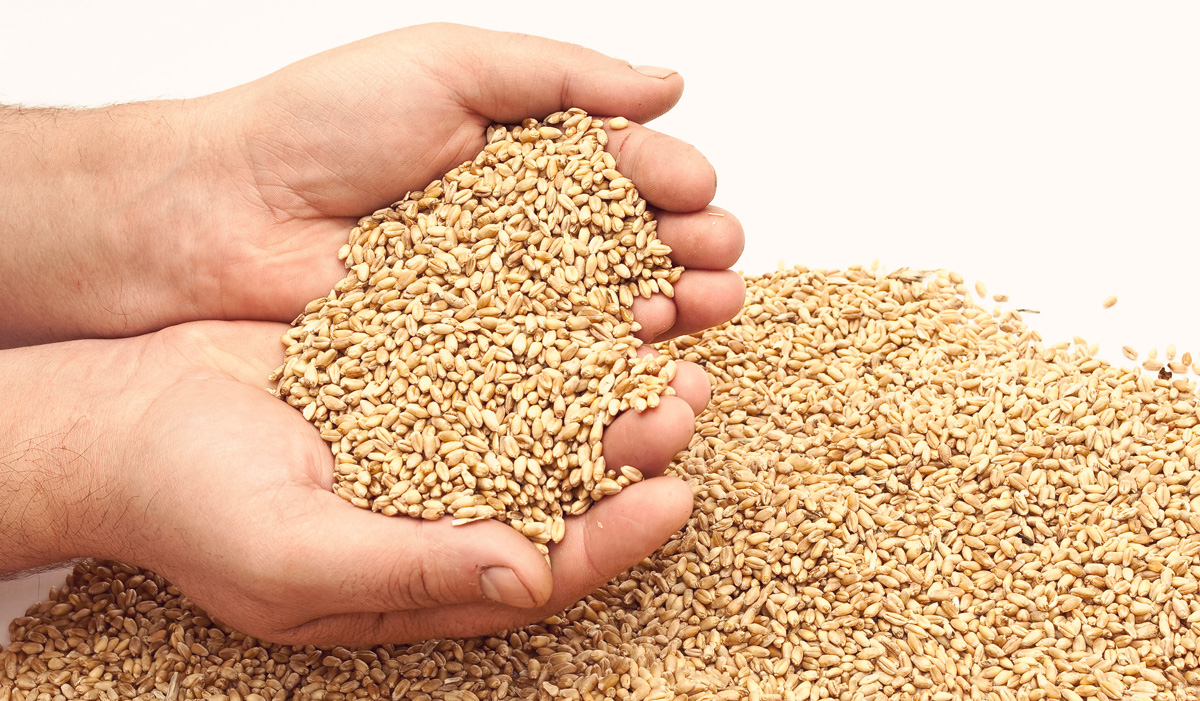
Originally, the stated amount of Zakat Al-Fitr was a sâ‘ of dates, or barley, or wheat. A sâ‘ was a “goblet,” (a standard drinking utensil) at the time of the Prophet ﷺ. There have been periodic inquiries by Muslim scholars (like the well-known investigation by Abu Yusuf, the great Hanafi scholar) to determine updated weight-and-measure equivalents to that of the of sâ‘ in the Prophet’s time. There is some minimal discrepancy, or difference, in determining this weight based upon the conversion of quantities of varying items (dates and wheat, for example) into a unified measure. Thus a sâ‘ is now estimated to be equal to anywhere from 2.176 to 2.25 kilograms, or just under 5 lbs. By the way, there is, however, an opinion in the Hanafi school with regard to determining the correct amount of Zakat Al-Fitr that specifies a half a sâ‘ of harvested wheat grain or its flour, but one full sâ‘ for items such as barley, dates, and raisins. However, this difference was based on the availability, or scarcity, of these items at the time this opinion emerged. Hence, the price of the staple items by which Zakat Al-Fitr is determined must be reconsidered in contemporary circumstances to the advantage of the Zakat Al-Fitr recipients. The classical Maliki, Shafi’i and Hanbali positions on the type of Zakat Al-Fitr offering discusses payment only in terms of weights and measures of provisions, or foodstuffs. It is the Hanafi opinion, however, which holds sway in this matter, and it states that Muslims may give the price of Zakat Al-Fitr, originally determined for grains and dates, in contemporary currency equivalents. They argue this position on the basis of a higher good or more practicable benefit, saying that money enables the needy person to buy what he or she deems to be most desirable or necessary on the day of Eid. They point out that a person may, for example, not be in need of a provision of corn, or the like, but rather in want of clothing, or meat, etc.Who is Liable for the Payment of Zakat Al-Fitr?
As we have noted previously, every Muslim is liable for paying Zakat Al-Fitr, provided that one holds in his possession food for himself and his dependents, enough for Eid eve and the following day. Knowing now what a sâ‘ amounts to, in terms of its contemporary weight equivalents, we can be more exact in defining who is liable to make the Zakat Al-Fitr payment. Every Muslim, whether rich or poor, who possesses (or has stored on his behalf) grains, or similar foodstuffs—or the monetary means of achieving the like of this—sufficient for one’s own sustenance, and that of one’s dependents for a full night and day, must give Zakat Al-Fitr. This sum is due not per household, but per person. The Prophet said,Give the Zakat Al-Fitr on behalf of [all your] dependents. (Baihaqi)
In so saying, he indicated that Zakat Al-Fitr would purify the wealth of the rich and be the cause of Allah giving more to the poor than what they have given. Thus whoever meets the feeding requirements for his or her family must pay the Zakat Al-Fitr payment for each and every household member. The Shâfiʿi and the Ḥanbali schools of Islamic Law state that a Muslim should give the Zakat Al-Fitr payment on behalf of him- or herself and on behalf of every single person under his or her care— including:- One’s wife
- One’s children (even if they are older but still dependent, or ineligible to make the payment according to Zakat Al-Fitr requirements)
- One’s parents (if they are poor or dependent)
- Any others who are established dependents of the household (such as foster children, orphans, and the like)
Frequently Asked Question
Answering the most relevant questions to help you better understand the article.
The article explains that Zakāt al-Fiṭr is an obligatory charity given at the end of Ramadan to purify the fasting person from shortcomings and provide assistance to poor Muslims before Eid.
The article explains that Zakāt al-Fiṭr purifies fasting from idle talk and mistakes while ensuring needy Muslims have sufficient provisions to celebrate Eid with dignity and happiness.
The article explains that every Muslim possessing sufficient provisions beyond essential needs for Eid must pay Zakāt al-Fiṭr for themselves and eligible dependents under their financial responsibility.
The article explains that a household head generally pays Zakāt al-Fiṭr for dependent family members, including children and others whose financial support is their established responsibility.
The article explains that Zakāt al-Fiṭr benefits needy Muslims while also spiritually benefiting the giver through purification, gratitude, generosity, and strengthening bonds within the Muslim community.
The article explains that Zakāt al-Fiṭr is specifically linked to Ramadan and Eid, unlike annual Zakāt on wealth, and is required from eligible Muslims regardless of wealth levels.
The article explains that the prescribed amount is one ṣāʿ of staple food for each eligible person, with scholars discussing modern equivalents according to local circumstances.
The article explains that Islam encourages household leaders to fulfill financial responsibilities by ensuring eligible dependents are included when Zakāt al-Fiṭr obligations apply.
The article explains that Zakāt al-Fiṭr promotes compassion, social responsibility, and mutual support by ensuring poor families can participate joyfully in the Eid celebration alongside others.
The article emphasizes fulfilling Zakāt al-Fiṭr sincerely as an act of worship that purifies fasting, assists the needy, and strengthens unity, generosity, and compassion throughout the Muslim community.

